


An 1885 letter from Calvert Downs station worker Bob McCracken to his sister Mattie details the role he played in a Gulf massacre that he said left more than 90 Aboriginal people dead or wounded out of a group of 200. The letter, written from the station that straddles the NT-Queensland border some months after the killing, was kept in a family collection, and donated to the Colonial Frontier Massacres project this month.
By Dr Robyn Smith
Researchers from the University of Newcastle are hoping a rare gift will lead to others from family-held collections across the country.
The gift, an 1885 letter from a station worker on Calvert Downs to his sister, details the role he played in a Gulf massacre.
In the six-page warmly affectionate letter to ‘Mattie,’ Bob McCracken describes life on Calvert Downs, which then straddled the Queensland-NT border.
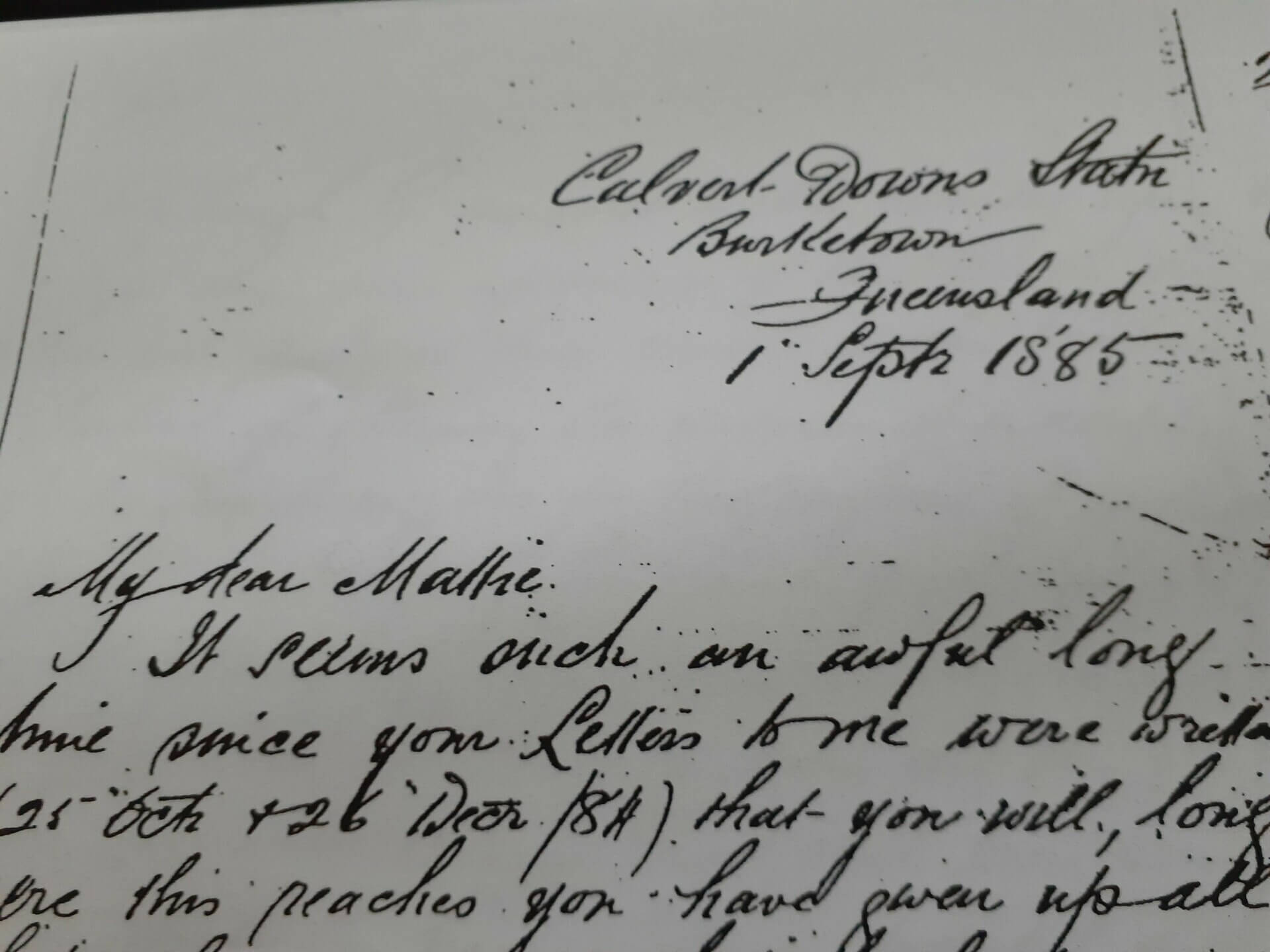
The letter written by Bob McCracken. Picture: Colonial Frontier Massacres project
He tells Mattie about the problem of cattle spearing without acknowledging that he was on Yanyuwa, Garrwa and Marra country. He mentions the station manager, Charles Fraser Gardiner needing to recruit Aboriginal men to help track the offenders after which he ventures into uncomfortable detail:
“Then, still more seeing the necessity for having thieves to catch thieves he was continually talking of the matter, and when he went away, was going to bring some back with him but the ‘Myalls’ in the meantime, finding we were unable to (without Black assistance, and having none) hunt them down became quite cheeky killing cattle and horses within a few miles of the camp and even getting on adjacent rocky hills and shouting and gesticulating defiance at us.
“Killing odd ones or even twos or threes is no good, they are never missed and nothing but wholesale slaughter will do any good.
“This town and the district are in a state of terror for want of police protection, all the outlaws from Queensland flock here. Horse stealing, forgery, robbery, violence, and repudiation of debts are included in the catalogue of crimes
“For instance some time ago one team was on the road, and at night was camped with another team having about 40 horses in all. In the night the Blacks attacked the horses, wounding three of ours and killing three of the other peoples. The damage was discovered at daylight in the morning and as soon as our horses could be saddled their tracks were followed from where they had cut up the horses, through the wet grass, about 8 miles to their camp on a lagoon. There were five rifles and a Blackfellow with a knife and tomahawk, and the result was out of a possible 200, 90 killed and wounded in the camp besides what wounded escaped. That Black with the Tommy was a perfect artist, equal to any two guns in the quantity he polished off…”
Bob’s letter to Mattie is dated 1 September 1885.
READ: ‘Kill or be killed’: The real story of Charlie Flannigan, the first man hanged in the NT
READ: Unfinished Business: The Territory’s ugly truth about Aboriginal massacres
His reference to ‘some time ago’ led researchers to conclude that the lagoon mentioned indicated that it was during or near the end of the wet season when water was plentiful so they settled on an indicative date of May 1885.
The ‘Black with the Tommy’ is a reference to the Aboriginal man and the method by which he used his tomahawk on horseback to hack people into whose territory he had ventured.
Bob’s Letter to Mattie was held in a family collection until it was passed to researchers on the Colonial Frontier Massacres project this month.
It is an invaluable first-hand account of a frontier massacre.
READ: The Brutal Truth – What happened in the gulf country NT
Tony Roberts detailed the violent history of the Gulf country in his book Frontier Justice.
“A number of Garrwa were shot on Calvert Downs at Waningirrinyi Waterhole on the Robinson River, near the homestead…some people were shot on the flat close by, but others were trapped on a nearby hill…People were also shot at Galugabuna,” he wrote.
At the time, the white population of Borroloola was about 150. There were very few women and no police.
An August 1886 column in the NT Times and Gazette summarised the situation in the region.
“This town and the district are in a state of terror for want of police protection, all the outlaws from Queensland flock here. Horse stealing, forgery, robbery, violence, and repudiation of debts are included in the catalogue of crimes…We shall be glad to see Mr. McMinn and his troopers arrive. The place is daily growing worse and more notorious,” the column read.
There is no reference to Aboriginal people in that passage. That was how the ‘civilised’ folk carried on and it was becoming serious.
“Some of the less patient of the residents are seriously talking of lynch law, and the establishment of a vigilance committee for the punishment of offenders,” it continued.
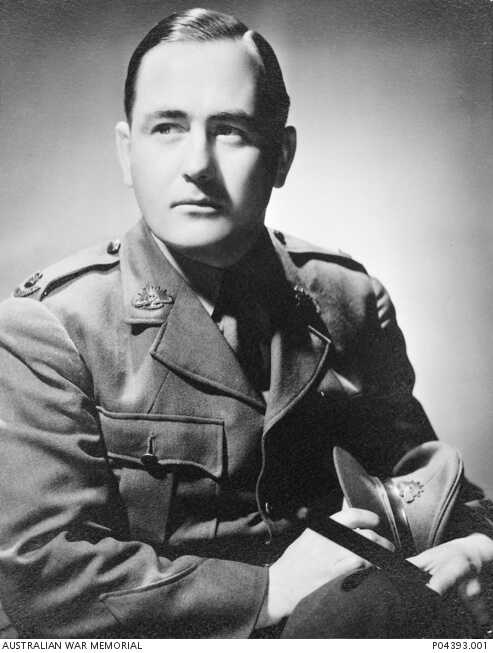
Studio portrait of Major William Edward Hanley Stanner, 2/1st North Australia, who was an anthropologist. Picture: Australian War Memorial
In a piece on the ‘great Australian silence’ by Anna Clark from the University of Technology Sydney, anthropologist W.E.H. Stanner – who, incidentally, was the Army Major responsible for the Nackeroos during World War II – was referenced in respect of Australia’s collective amnesia when it comes to frontier violence.
“It is a structural matter, a view from a window which has been carefully placed to exclude a whole quadrant of the landscape. What may well have begun as a simple forgetting of other possible views turned under habit and over time into something like a cult of forgetfulness practised on a national scale,” he said.
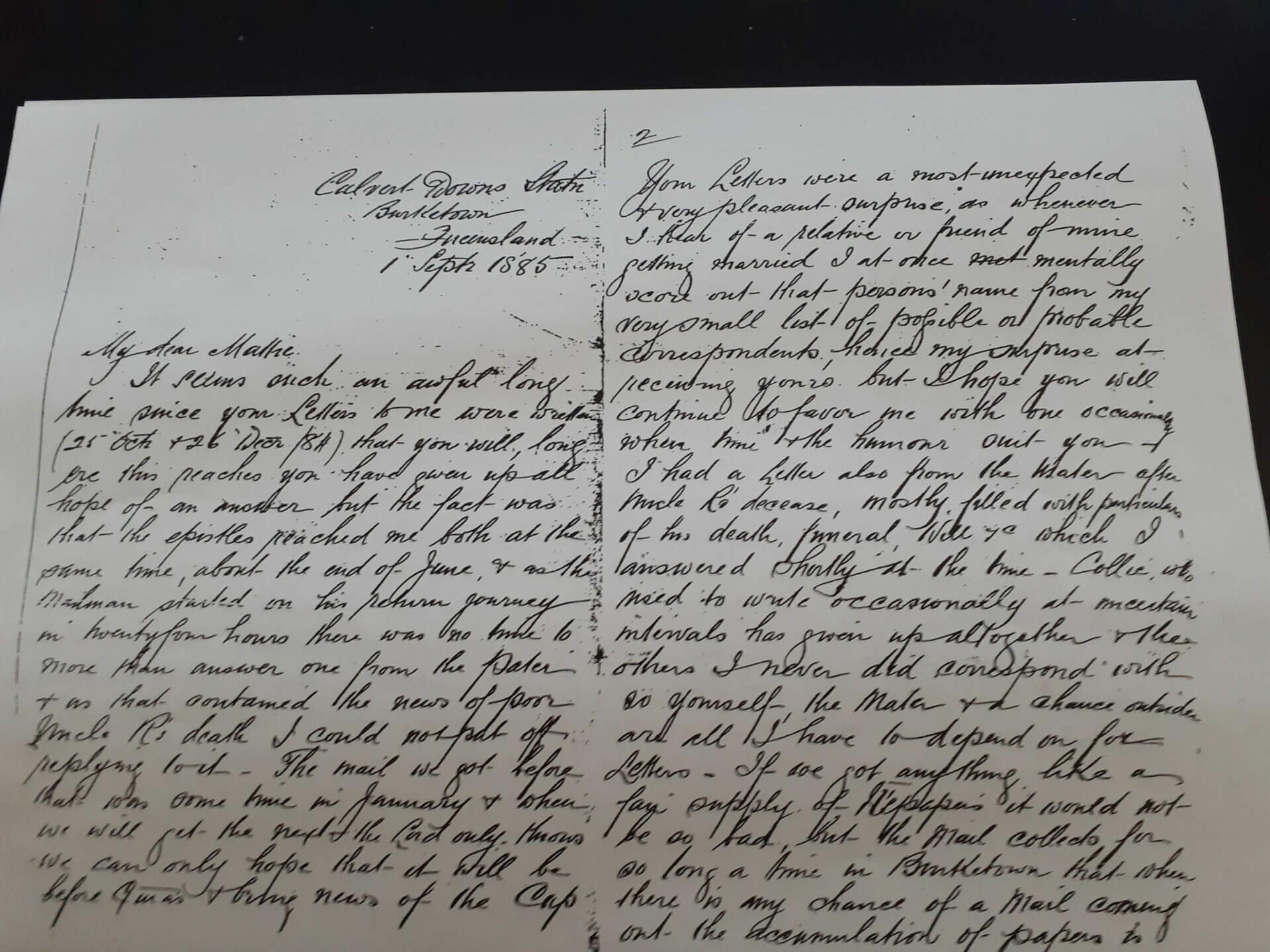
This is precisely why Letter to Mattie is so valuable to the research team. It was passed on by Robert Niall and Elsie Ritchie who were engaged in extensive research on the Cudmores, a family that emigrated from Ireland in 1835.
Researchers on the project are appealing to other families who may have similar treasures among their papers and may be oblivious to the value they serve Australian history.
Anyone who has anything that may contribute to our collective knowledge of the frontier is encouraged to discuss it with the research team.
Dr Robyn Smith is a Conjoint Fellow at the University of Newcastle, a PhD (Political History), Master of Cultural Heritage and Bachelor of Arts (Journalism & Anthropology) from Darwin. She is well written on the history, heritage and politics of the Northern Territory and is presently researching frontier massacre sites in that territory.
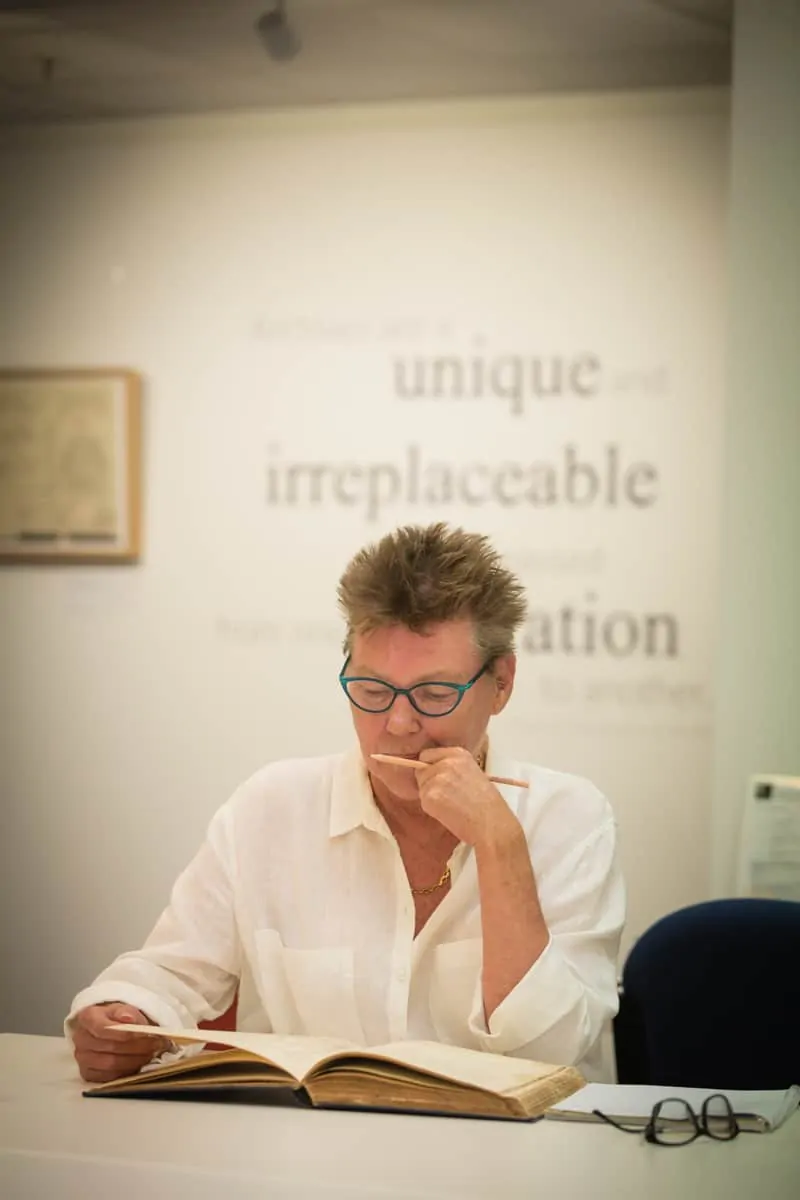
Historian Dr Robyn Smith. Picture: Glenn Campbell

0 Comments