
EDITORIAL: Where’s the leadership on the Gunner Government’s much-hyped remote housing program?


EDITORIAL: Where’s the leadership on the Gunner Government’s much-hyped remote housing program?

In the final part of an essay evaluating how the Gunner Government rates for good governance, Dr Don Fuller looks at the continued Freedom of Information failure under the Gunner Government and then the banning of the free press, plus the lack of business cases for the largest projects going on in the NT, the Charles Darwin University Darwin city campus and the State Square redevelopment. Then Dr Fuller proposes an alternative approach to governance and to Budget waste.

OPINION: Much has been said about his shift in view on fracking, writes Territory Alliance leader Terry Mills, but what seems to be conveniently missed by those angered by his shift, he writes, is that the NT is in recession, the government is effectively broke and the Territory taxpayer cannot afford more pipe dreams.

OPINION: Terry Mills has completely turned his back on the core values of conservatism to gain popular support, writes Owen Pike.

In the fourth part of an essay evaluating how the Gunner Government rates for good governance, Dr Don Fuller looks at the failed taxpayer funded NT Beverages investment, the 2019-20 Budget – with the Territory Government daily interest bill hitting $1 million and debt estimation of $6.2 billion – and the serious probity, accountability and transparency questions from the racecourse grandstand funding.

In the third part of an essay evaluating how the Gunner Government rates for good governance, Dr Don Fuller looks at the establishment of the ICAC, and the need to improve accountability and transparency in the pubic service, the Government admission of the ballooning debt, the booting of the Labor trio Vowles, Collins and McConnell for speaking out publicly about the economic crisis and how the Government responded to the Langoulant report.

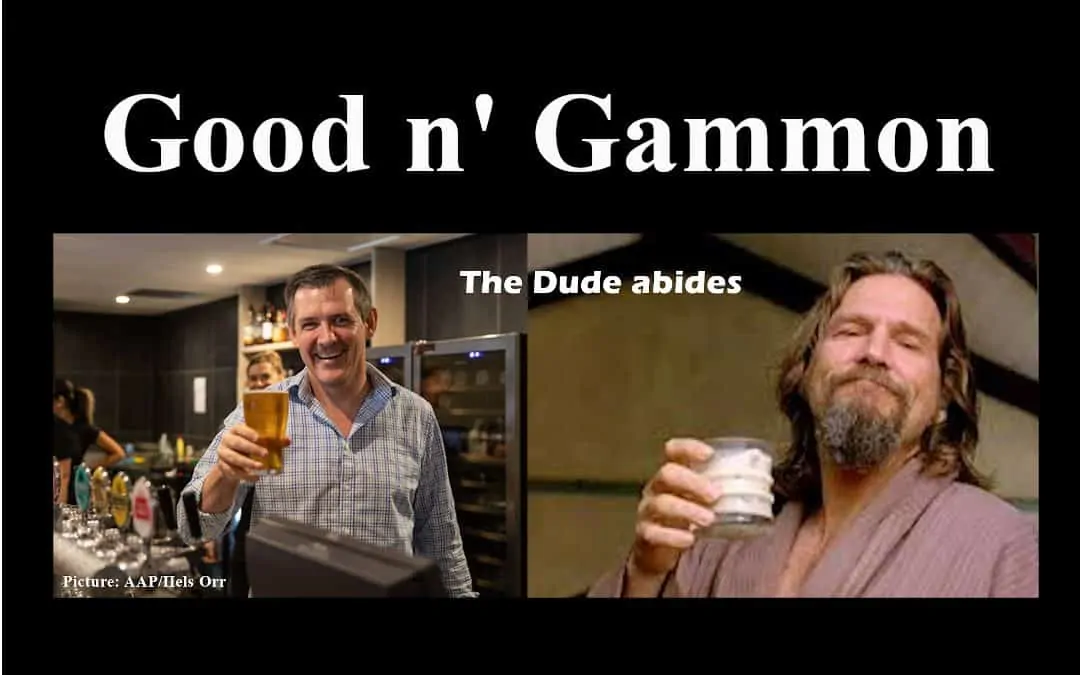
A big week in the Northern Territory and as we adjust to a post innocence, post Speaker Purick world with ICAC announcing itself. From the document the Chief Minister signed in his role on the Shenzhen-Darwin Sister City Committee, to our GoFundMe campaign to free Dr Hugh Heggie – or take him by force -, to the NT restaurateur who has added B&D to the menu, this is what is good and what is gammon this week.
In the second part of his series evaluating how the Gunner Government rates for good governance, Dr Don Fuller looks at how they were rated by an academic early on for transparency and accountability, the halving of the time the Estimates Committee had to scrutinise the Budget, the establishment of ICAC and how the Auditor-General found the NT Government had handed out billions of dollars in grants without proper record-keeping processes.

This is the first of a five part presentation of an essay by Dr Don Fuller evaluating the Gunner Government against the characteristics of good government including the principles of transparency and accountability and how the five core attributes of good government make for the foundation of strong economic and community development.

Another week and finally the Territory is turning to face the rest of Australia. From the borders opening to the Gunner Government’s shame job on national telly, to the mystery of the political prisoner Dr Hugh Heggie, this is what is good and what is gammon this week.
Independence is vital in how a newspaper operates and is at the heart of our mission to provide Territorians with unfettered access to stories – your stories, told without outside influence.

Prime Minister Scott Morrison asserted in a radio interview “there was no slavery in Australia”. However academics Thalia Anthony and Stephen Gray argue this is a common misunderstanding which often obscures our nation’s history of exploitation of First Nations people and Pacific Islanders. Legislation facilitated the enslavement of Aboriginal people in parts of Australia, including the Northern Territory, and underpinned the cattle industry with Aboriginal workers bought and sold as chattels, they write. Read the full work here.