

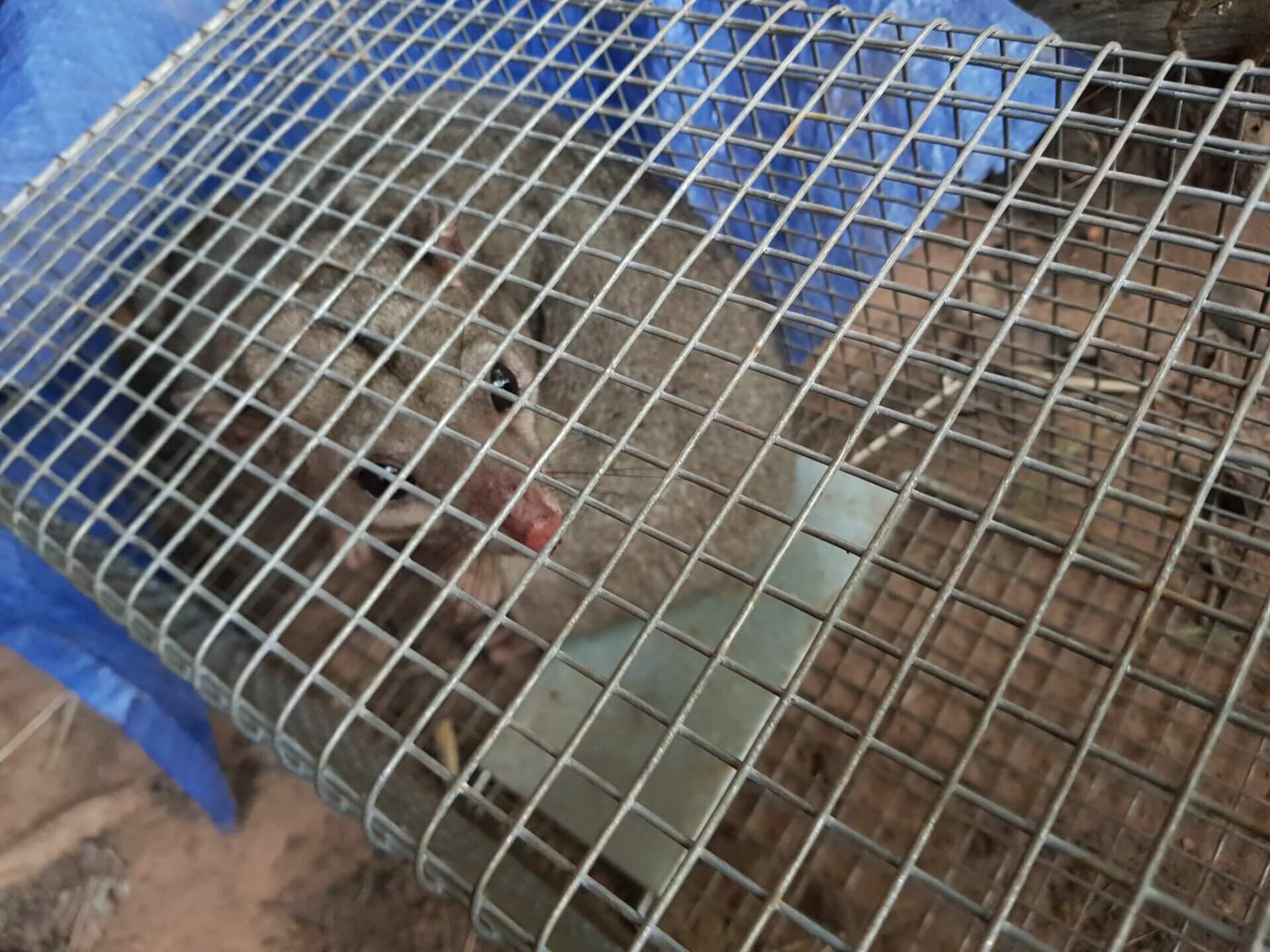
A rare scaly-tailed possum, also known as a wyulda, has been caught in the Territory for the first time by scientists, the Australian Wildlife Conservancy has said.
AWC senior wildlife ecologist Dr Eridani Mulder said that in April and May ecologists conducted animal-trapping surveys to monitor the ecosystems on Bullo River Station, and the presence of the rare animal signified progress under a new land management model which combines pastoralism and conservation.
Dr Mulder the Wyulda, a rock-dwelling marsupial that before 2018 had only been recorded in the Kimberley, is characterized by its stout limbs and a strong, gripping tail, and roams rocky terrains, feeding on seeds, fruits and flowers by night and sheltering among the rocks during daytime.
AWC ecologists, since 2018 have made an in-depth study of the wetlands, rocky ranges, and grassy savanna woodlands in the area as part of its conservation partnership with the station.
“Presently, the ecologists are targeting rare mammals which are of conservation concern such as bandicoots and Wyuldas,” Dr Mulder said.
“It’s an exciting place to work because you never know what might turn up. When we first detected the possum on camera traps, that was a pretty big deal – it was the first record for the species outside of Western Australia and a range extension of about 150km.

Dr Mulder said catching a wyulda has enabled scientists to take tissue samples for genetic analysis that will provide detailed information about the species at the very east of its range.
“We set around 15 to 30 traps along the base of the escarpment at dusk and came back before dawn to check them. From a total of 181 trap nights, we caught just one possum,” she said.
“We always take great care to limit the stress on the animal through trapping, so we took a small ear clipping for genetics, and then released it back in the same place. We caught the same animal the next night also – he was a fan of peanut butter and apple.
Julian Burt who co-owns the Bullo River Station said the catch is evidence that the innovative style of land management partnership does deliver great ecological outcomes.
Dr Mulde said ecologists, however, are yet to catch one of to bandicoot species found in north-western Australia, the northern brown bandicoot and rarer golden bandicoot.
“Genetic analysis is the only way to make an exact identity between the two,” she said.
The AWC partnership with the station carries out conservation work combined with a sustainable cattle farming operation which aims to maintain and improve the status of biodiversity in the 160,000-hectare property.
The partnership involves managing fire through a program of prescribed burning, weeds removal and control of feral animals, including laborious monitoring of wildlife through constant ecological surveys.


0 Comments