

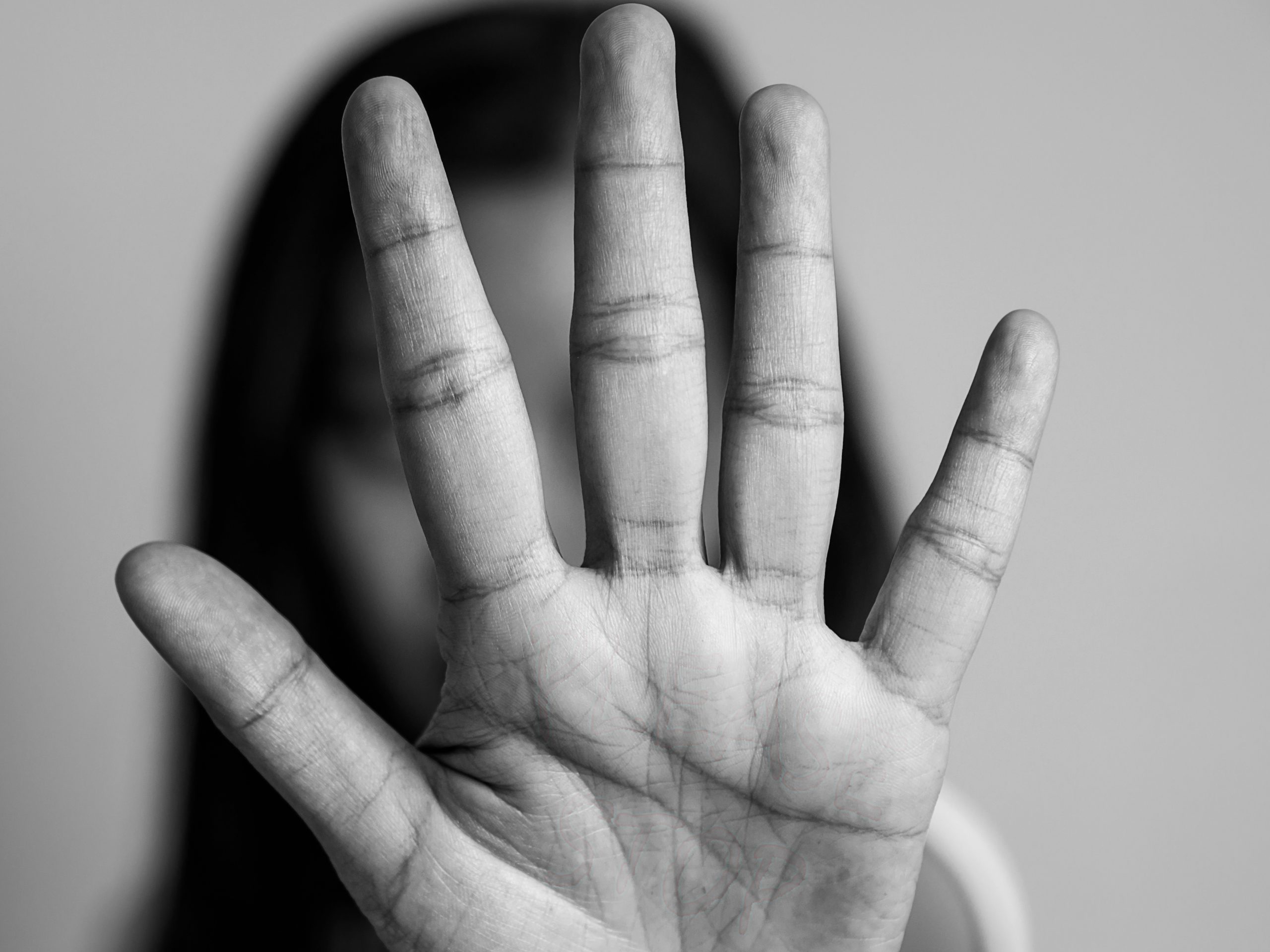
Coroner Elisabeth Armitage will release her findings and recommendations this morning into the deaths of four Indigenous women who died as a result of domestic violence, following a landmark inquiry that critically analysed the circumstances surrounding the tragic deaths and the NT Government’s inadequate responses.
Since 2000, the Territory has seen a tragic loss of 87 women due to domestic, family, and sexual violence (DFSV), with 82 of these being Aboriginal women.
The numbers are becoming more alarming, with eight Territory women allegedly dying at the hands of their partners since June 1 of this year.
The tragic deaths of four Aboriginal women – Kumanjayi Haywood, Ngeyo Ragurrk, Kumarn Rubuntja, and Miss Yunupingu – prompted a significant coronial inquest that began in July 2023 with its conclusions to be released later today.
This inquest brought together the cases of these four women to investigate the systemic issues present within the domestic, sexual, and family violence sectors in the NT.
In the time leading up to their deaths, all four women had voiced concerns about their safety to both authorities and loved ones. Additionally, each of their killers had a background of family violence and was familiar to the police.

The NT has the highest rates of DFSV deaths in the country, registering a 117 per cent increase over the past decade, with police projections anticipating a further 73 per cent rise over the next 10 years.
National DFSV Commissioner Micaela Cronin told the ABC that “deaths of Aboriginal women in the Northern Territory don’t capture the national attention that they should, and I find it deeply distressing [and] angering how little of our national attention is given to something that is [as] significant and important a process as this inquest”.
At the start of her investigation, Ms Armitage warned that the evidence would be tough to hear. After hearing from 95 witnesses, she concluded that domestic violence in the NT had reached “epidemic” levels.
Her investigation exposed gaps in all aspects of the NT Government’s response.
“There doesn’t seem to be a path forward without a radical re-evaluation… We can’t keep responding to the levels of violence with so little effect,” she said.
Her investigation also revealed that DFSV cases constituted up to 80 per cent of the police force’s call-outs, leaving officers overwhelmed and inadequately trained for such complex situations.
In prisons, over half of the inmates are incarcerated for domestic violence offences, yet there are insufficient rehabilitation programs available.

Additionally, shelters for victim-survivors frequently have to turn women away due to a lack of resources.
Ms Cronin pointed out that “racism is definitely a factor” contributing to the lack of awareness about the extent of domestic violence in the Northern Territory.
She said it was heart-wrenching to know now that the women’s deaths could have been prevented.
“Just how many points of intervention there were where we could have saved these women’s lives [was] shocking but not surprising. We need every bit of the system to recognise that they are part of the problem and the solution,” she said.
“The health department, education department, police [and] frontline services [are] drowning in their ability to respond.”
Ms Armitage is set to deliver her findings today and propose solutions for a system currently in “crisis mode.” She is also expected to advocate for a substantial increase in funding for the sector.

The inquest uncovered severe underfunding in domestic violence services in the Territory.
In August 2023, the for Labor government rejected a $180 million funding request for women’s shelters, instead allocating just $20 million over two years.
NT director of strategic policy in the domestic, family and sexual violence reduction division, Anna Davis, stressed the need for sustainable, needs-based Commonwealth funding, noting that the NT receives only 4.6 per cent of federal funds for family domestic violence due to its small population.
Last week, the Aboriginal Medical Services Alliance Northern Territory (AMSANT) urged the current CLP Government to honour its $180 million election pledge to address the ongoing crisis.
“Before the election, both major parties recognised the desperate need and committed $180 million over five years to support specialist services. Yet, since taking office, the CLP government has provided no details on how this critical funding will be delivered,” AMSANT CEO Dr John Paterson said.
READ about the 35 recommendations and findings from Armitage here.

Allow me to share with you a copy of a paper written on the subject of traditional Aboriginal society 40 years ago. I believe to this day that what I wrote, albeit at a time of when I was relatively new to education (but with quite a number of years of remote teaching and school leadership already accumulated) is still very relevant.
The situation confronting indigenous women is getting worse and worse and there seems to be no end in sight for that trend. How I wish it were different and better.
Henry Gray
________
Paper Prepared for the
Pacific Womens Diamond Jubilee Conference
Held in January 1982
I was principal of Angurugu Community School on Groote Eylandt, from 1979 until 1982. I was asked to write a paper on Aboriginal Education for the Pacific Womens Diamond Jubilee Conference held in Sydney in January 1882. The following was what I wrote. Forty years later, my propositions if anything are even more relevant than they were at that time.
A dilemma of the developing Aboriginal society is one of attitude. Women can play a vital role in societal development, if the society will let them.
There is abundant evidence to show that young Aboriginal women can do well at school, and that they do achieve. The dilemma is ‘for what’. Often it is for a return to the camp life, where child bearing and child rearing provide the only relief from the monotonous domestic routines that follow.
Aboriginal society is patriarchal. It is what men say that counts, and what men want that happens. Aboriginal women have vision, for they are thinkers and they know what they want. But they often don’t have the power in their society to put their thoughts into action. They just don’t count enough.
This so often means that education only frustrates teenage girls growing up into women, because education shows the girls concerned what they could be and trains them toward doing things they learn about. In the end however, it means nothing because society tells them they must fill a position in life that puts them into a less important position than men.
Aboriginal culture and tradition is important. But often men, who are the custodians of this culture think ‘back’ to it without thinking ‘forward’ enough to the changes forced on Aboriginal society by the time and place in which we live. Women in Aboriginal society seem more futuristic; they think to the future and with education gain the understanding they need to play a part in the change that happens.
Economically, the men command the money the community earns, even when that money is earned by women.
Time and time again women will be asked to hand over money they have earned, so it goes on other things than providing food for families and children in those families. I have frequently seen women interrupted in their work b y those coming to demand money for this and that. Woman contribute to local economy by seeking work and earning money. But too often that money is taken by demand and disappears.
Many women became frustrated because they earn money they never see. They have to earn it while still doing huge amounts of ‘looking after’ at home.
Aboriginal society might be more progressive if women had a say in the development of that society – both locally in each community and overall by their membership of land councils and other organisations. While women can influence the thinking of their men by talking to them, they never actually do any of the (wider level) talking. If they could put their thinking into action, many communities might be further advanced than they are.
It is not so much a question of education and training for women that is a worry, but one of what satisfaction the education and training is giving. If any. It seems to be that training gives women a chance to earn money that others can take. There needs to be training in the thinking that is necessary if Aboriginal women are to come out as spokespersons and leaders who can be seen to lead in their communities.
Education and training to be successful must succeed in enabling Aboriginal women gain that confidence necessary to their emergence, so they are seen as a visible voice for their people. If education only ‘trains’ to the point of giving skills and work understandings to women, then they will continue to be hidden in a culture that traditionally allows men to be seen and keeps women hidden.
Education to be really meaningful must succeed in enabling women to rise to a point of making social and economic decisions. Women have to be seen as equal.