

The Lawler Government has announced the seventh review into the Batchelor Institute of Indigenous Tertiary Education since 2017 – roughly 15 months after the Independent Commissioner Against Corruption released his review – which follows the Auditor-General refusing to sign off on the institute’s financial report for a second year running, but the government will not say if the failings of education ministers Eva Lawler, Mark Monaghan and the NT Education Department chief executive officer will be examined.
The institute has failed to employ a chief executive officer or a chief financial officer for 16 months, has only four members of the board – known as the council – when 10 are required under legislation, and has seemingly failed to reintroduce an Indigenous advisory board that ICAC Michael Riches ordered be brought back under existing legislation.
It is also unclear how many of the 27 recommendations made by the ICAC last January have been implemented.

The responsibility for implementing those recommendations was in part tasked to the former head of the Batchelor governance and policy team whose oversight failings – along with those of the council and other executives – were the basis for the report.
The report followed years of turmoil, including what sources had told the NT Independent was a proper ICAC investigation that was never released following credible allegations of corruption and mismanagement, allegations that were also part of a report prepared by a whistleblower at the request of then-chief minister Michael Gunner’s office while Ms Lawler was the education minister.
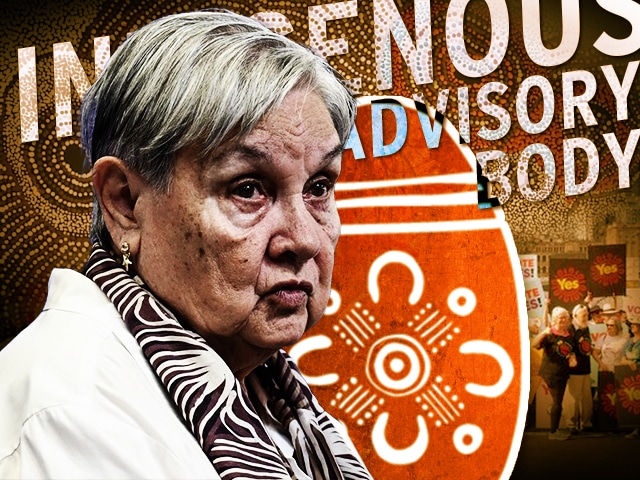
Chief Minister Eva Lawler, and current Education Minister Mr Monaghan, “announced” the latest review after being sent questions by the NT Independent about the functioning of the institute following Auditor-General Julie Crisp’s latest dismissal of its financial report for the second year running, and why the council chair, Pat Anderson, remained in her paid role despite the extreme failings of governance over an extended period of time.
Under legislation that Batchelor Institute is governed, it is the education minister’s job to nominate candidate’s for five of the 10 council positions for appointment by the NT Administrator, which includes the chair. The council is also legally obligated to include a student, someone nominated by the CEO of council itself, a staff member, the CEO of the institute, and the Education Department CEO.
The Institute’s website lists only four members of the council, including Ms Anderson and Education Department CEO Karen Weston, meaning the minister could only have nominated two people. But Ms Lawler and Mr Monaghan refused to say if they had fulfilled the requirements of the legislation.
Neither Ms Lawler, Mr Monaghan, nor Ms Anderson would say how many current members are on the council.
Ms Lawler and Mr Monaghan both said in a statement that the Education Department was working with, and supporting the Batchelor Institute to commission a review of its corporate governance arrangements, which include financial governance and policy development in line with recommendations from the ICAC, which was due to be complete by mid-2024.
The ICAC review was released publicly in late January last year, with Batchelor Institute seeing a draft by about late October, that ordered “the Institute, as a matter of priority, conduct a wholesale review of its policies to ensure contemporary relevance, consistency and clarity”.
Ms Lawler and Mr Monaghan would not say when Batchelor’s own “review” had begun.
They would also not say if it would include reviewing their own failings or those of Ms Weston, who was part of the council that had not hired a CEO or CFO in 16 months. That council also oversaw the two financial reports that Ms Crisp raised concerns about, including the validity of student numbers, which were the basis for federal and Territory government funding, as well as insufficient audit evidence to support other sections of the financial report, including other revenue and income; as well as the value of employee-related expenses.
The ministers would also not explain if Ms Weston would be involved in the review, and if she was, how her conflict was to be managed, considering her role in the serious governance failures.
Ms Weston did not respond to questions.
Batchelor Institute did not respond to questions about why there was no CEO or CFO for so long, why there were not enough members on the council, why the full financial report with the scathing disclaimer by Ms Crisp was not in the 2022 annual report, and if Ms Anderson would resign over the serious governance failures.
According to the annual report, Ms Anderson, who lives in Canberra, is listed in the pay bracket of between $30,000 and $44,999 for her part-time role.
The NT Independent understands she is paid $40,000 a year, with access to salary sacrifice. Another source said she would also be provided a daily travel allowance on top of accommodation when she visited Batchelor campuses or attended meetings.
Opposition shadow education spokeswoman Jo Hersey said the situation with Batchelor Institute was another example of Labor having no regard for good governance or responsible use of taxpayer money.
“Most recently the fact that Tangentyere in Alice Springs had not submitted an annual report for 6 years despite receiving $30 million of tax payer money annually,” she said.
“As we can see in this case, the response by Labor is yet another review, the seventh, with again no details, when will the review begin? Will it be released?
“Importantly this failure by the Bachelor Institute to fulfil their requirements despite six prior reviews has happened on the chief minister’s watch as education minister. Judge her on her record.”
A history of reviews and investigations
In her audit disclaimer for the financial report, Ms Crisp listed the reviews into Batchelor conducted over the previous six years: the Assurance Advisory Group Financial Governance Review in 2017; the Deloitte assessment of the 2018 budget and cash flows; the Vincents Risk Management Project in 2020; the Ernst & Young Financial Sustainability Review in 2020; Bentley’s Review in 2021; and the ICAC review last year.
“Each of these reviews has resulted in reports identifying areas of improvement and/or recommendations for the Institute in relation to corporate governance matters, financial management and internal controls. Many of the recommendations are yet to be addressed,” she wrote.
The ICAC review report did not address any wrongdoing or improper conduct and only offered generalised references in the report and motherhood statements in summaries on different topics.
The problems relating to improper conduct are presumed to be the underlying basis for the report’s 27 recommendations, including Mr Riches’s reference to training staff in their ethical responsibilities, reporting requirements, whistleblower protections, and management of improper conduct.
Other serious problems are hinted at vaguely in references to reviewing the assets register, issues with direct appointments when recruiting, missing procurement documentation and evidence of why suppliers were selected, a lack of conflict of interest provisions, the need to review the financial controls and risk management, and reviews of the code of conduct for staff and the board, known as the council.
The NT Independent has been told by multiple sources the former Batchelor director of executive services Sam Ludwig, who was responsible for governance and policy during the time of the ICAC review, has been tasked by council chair Pat Anderson to implement the ICAC recommendations in a job-share arrangement with another employee.
The role of the director of executive services at the institute is described as responsible for the management and operations of the governance and policy team and oversees the secretariat to the Batchelor council, the finance audit and risk management committee and other executive committees.
The NT Independent understands the Office of the ICAC was probing the institute from at least February 2021, just before allegations of misconduct and bullying by some senior managers at the college surfaced.
In mid-December, the NT Independent reported the Institute was looking for its ninth chief executive officer since August 2017, after the sudden and unexplained departure of Leon Yeatman, less than five months into the job, and that it had lost $11.1 million from 2016 – 2020. The 2021 annual report has not been published on the Batchelor website.
In its financial statement, Batchelor Institute claimed an operating surplus of $1.51 million for 2022, up from its claimed $760,000 surplus the year before, with a one per cent – or $330,00 increase in revenue compared to 2021 – mainly due to a Federal Government funding increase of $1.87 million.
However, in the previous seven years, Batchelor has reported repeated losses, equating to roughly $15.8 million over the last 10 years.


An Aboriginal organisation losing millions of tax payer dollars, who would have ever thought that could happen?.
Aboriginal Organizations have their own Register which appoints a liquidator, they fall over so fast leaving the Government to clean up the mess!
When will accountability return to government?
BIITE is a sacred cow! It has been uneconomical for decades and is now at its most lowest point!
Double Digit Student Count, with over 220 staff!
Its time Batchelor closed down and the training be handed over to that other uneconomical training provider, CDU!