

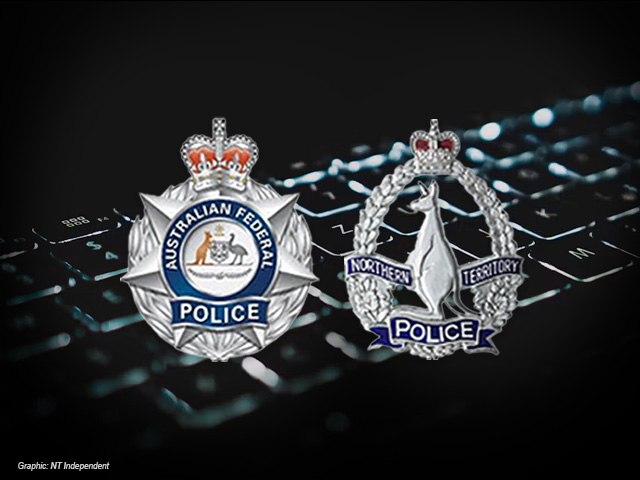
A second Darwin teenager has been charged in connection to terrorism related material and online discussions “concerning terrorist acts”, following a counter terrorism joint investigation that involved the raid of a Darwin home yesterday where prohibited weapons and electronic devices were seized, the AFP said.
The latest charges follow the charging of a male teen last week with terrorism related offences, involving references to attacks involving a school or place of worship.
The second teenager, identified in reports as a 15-year-old girl, appeared in youth court on Wednesday, charged with collecting or making documents likely to facilitate terrorist acts.

The Joint Counter Terrorism Team NT (JCTT-NT), including the AFP, NT Police and ASIO, started its investigation last month after receiving a tip through Crime Stoppers alleging “violent extremist material being posted online by an Australian user”.
The second teen’s home was raided Tuesday, where police seized “items of clothing, documents, electronic devices, and controlled and prohibited weapons”.
The AFP said in a statement that an initial examination of the documents and devices identified “material and online discussions with a mixed ideological motivation, including glorification of mass casualty attacks at schools”.
The federal charge of collecting or making documents likely to facilitate terrorist acts carries a maximum penalty of 10 years in jail.
NT Police Commissioner Martin Dole said it was “deeply concerning” a second teenager was identified during the joint investigation.
“I understand that the involvement of another young person may cause concern in the community,” he said.
“I want to be clear that people should be alert, not alarmed. Our investigators are working closely with our Commonwealth partners and, I can assure everyone that we will fully investigate, and when needed, act upon all relevant information arising from this matter.
“This is also a reminder that keeping young people safe from radicalisation is not something police can do alone. Parents, families, schools and the wider community all have a role.
“Be interested in what young people are doing online, talk to them and pay attention to significant changes in behaviour. If something concerns you, tell someone. Information from the community can make an enormous difference.”

AFP Commissioner Krissy Barrett said the radicalisation of youth was the greatest challenge facing the country.
“When I became Commissioner, I promised I would have candid conversations with Australians to inform them about the threats they face, and this one is confronting,” she said.
“In the current climate of fraying social harmony, we are seeing more disengaged, confused, resentful and sometimes violent young people.
“It is also coming at a time when many protective factors, such as support like family, sport, school, faith leaders, teachers, are eroding or are not there at all. These are the reinforcements that cocoon our young people from harm.”
Ms Barrett added that some young people are “impressionable and curious” and susceptible to being manipulated via social media.
“Many youths want answers about contentious or polarising issues. So instead of asking a parent, teacher or coach, they look for answers online and are often siphoned to sites that peddle mis and disinformation, or to chat groups or platforms that are violent, racist or are misogynist,” she said.
“The simple fact is; the number of young people being investigated by our Joint Counter Terrorism Teams is increasing.
“If it used to take a village to raise a child, because of advances in technology, it now takes a country to keep them safe. This is not a problem law enforcement can solve on its own. This requires a whole-of-society effort.”
The AFP statement said signs that a person may be susceptible to radicalisation include distancing themselves from their usual friends and family; an increase in the extremist nature of their rhetoric or propaganda; using hateful or emotionally charged language; developing a fixation on conspiracy theories or contentious social issues; extreme reactions to certain news or politics; and spending increasing time in fringe forums on the internet.
“If you suspect someone is being radicalised online or in person, call the National Security Hotline on 1800 123 400. For anonymous reporting, visit the Crime Stoppers website or call 1800 333 000,” the statement said.
“Information and support are also available at the Step Together website, which is a helpline and digital support service for people seeking advice on how to support loved ones and protect them from negative violent extremist interest.”

0 Comments