

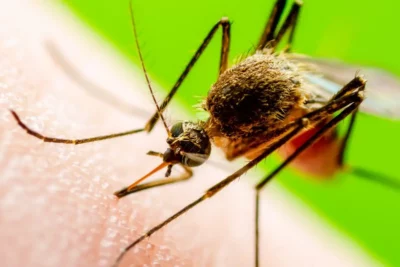
NT Health is urging Territorians and visitors to take steps to protect themselves from Japanese encephalitis (JE) after an increased number of feral pigs have tested positive for the disease in the Top End in recent days.
Medical Entomology Unit director Nina Kurucz warned that JE is a serious disease carried by mosquitoes capable of infecting humans and animals.
“The highest risk period for being bitten by an infected mosquito is after sundown within five kilometres of wetlands where feral pigs and water birds potentially infected with JE are present,” Ms Kurucz said.
She said that 44 feral pigs infected with JE have been recorded in Victoria Daly, Litchfield, Marrakai-Douglas Daly and Cox-Daly region and the Tiwi Islands since March this year.
“The best way to prevent JE and other mosquito-borne viruses is to avoid getting bitten,” Ms Kurucz said. “It is recommended people wear protective light-coloured clothing with long sleeves, long trousers and socks in areas where mosquito bites are likely. People should also use a protective repellent containing DEET, picaridin or oil of lemon eucalypt.”
The Northern Territory Government and the Australian Government’s Northern Australia Quarantine Strategy (NAQS) have partnered to undertake ongoing JE surveillance activity across the region.
The Department of Industry, Tourism and Trade (DITT) is also helping the NT Health’s monitoring program by surveilling the domestic animal population for signs of JE.
NT Health said it is important to take steps to avoid mosquito bites since there is no specific treatment for JE. A vaccine, however, is available.
While potentially fatal, JE is not transmittable from person to person or from eating infected pork meat.
“Most people with JE will be asymptomatic but, on rare occasions, it can result in severe disease and even death. Symptoms can include fever, headache, neck stiffness, vomiting, confusion, seizures and paralysis. People who believe they may be infected with the JE virus should seek urgent medical assistance,” Ms Kurucz said.

Territorians can avoid mosquito bites in likely areas by:
- Wear protective light-coloured clothing with long sleeves, long trousers and socks;
- Avoid outdoor exposure near wetlands and flooded areas, especially after sundown;
- Use a protective repellent containing DEET, picaridin or oil of lemon eucalypt (PMD) and other mosquito protection devices;
- Ensure infants and children are adequately protected against mosquito bites;
- Consider insecticide barrier treatments by pest control companies for use around residential grounds;
- Ensure windows and doors have screens to prevent mosquitoes from entering houses.
“JE is a notifiable disease, so animal owners, vets, hunters, landholders and the public should report suspicious or unusual signs in animals to the Emergency Animal Disease Watch Hotline on 1800 675 888,” NT Chief Veterinary Officer Dr Sue Fitzpatrick said.
Dr Fitzpatrick said DITT is working with property owners with feral pigs infected on or near their properties by providing free testing for registered pigs.
“We’re … urging people to report unexplained pig miscarriages, stillbirths or neurological signs in young piglets. Horse owners are also asked to report any cases of neurological signs in horses so that we can test for JE,” she said.
For additional information on JE visit the Australian Government Department of Health website or call the NT Health Medical Entomology team on 08 8922 8510.


0 Comments