

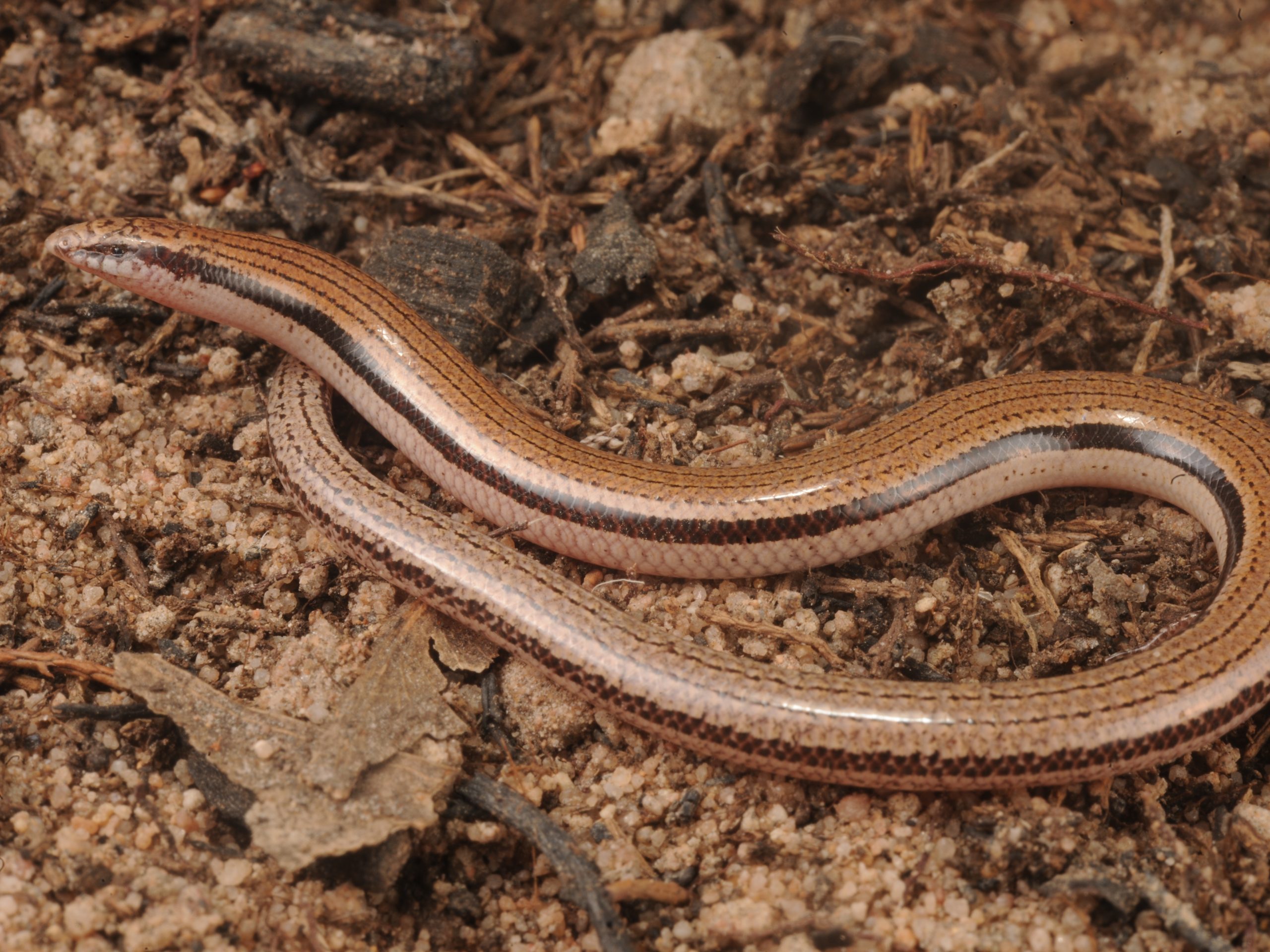
Scientists have named a newly discovered species of limbless slider skink that was found in a Northern Territory wildlife sanctuary at the bottom of the Gulf of Carpentaria, the Australian Wildlife Conservancy has said.
Senior wildlife ecologist Dr Eridani Mulder said in targeted surveys, researchers caught two individuals of the new species of skink 10 years apart at the Pungalina-Seven Emu Wildlife Sanctuary, which is situated in the NT at the bottom of the Gulf of Carpentaria on Yanyuwa and Waanyi-Garawa country, and which is a historically under-surveyed area lacking in scientific research compared to regions like Cape York, the Top End, and the Kimberley.
“As one of the least biologically surveyed areas in Australia, we still have lots to learn about biodiversity in the Gulf. Every record, even of something as inconspicuous as a tiny sand-dwelling skink, helps us build a more complete picture of these ecosystems,” Dr Mulder said.
“So far, this new species of little lizard has only been recorded at Pungalina-Seven Emu, so it’s vitally important that we continue to look after this place.”
Dr Mulder said the species had been named Lerista munuwajarlu which comes from Garrwa language with munuwa meaning ‘no’ and jarlu meaning ‘arm’, but said the common use name is the Gulf Coastal Slider.

AWC has managed Pungalina-Seven Emu as a wildlife sanctuary since 2008, focusing on reducing feral animals and enhancing fire management.
Dr Mulder said that In 2012, a fauna survey with the Royal Geographic Society of Queensland and CSIRO discovered a unique skink specimen with two-toed hindlimbs and side stripes, suspected to be an undescribed species.
Despite further searches, no additional specimens were found.
But a decade later, Dr Mulder said, researchers from the Australian National University found a second individual, and genetic analysis confirmed it as a distinct new species closely related to the genus Lerista, which has 98 known species in northern and eastern Australia, often with limited ranges.
Dr Mulder said AWC was dedicated to protecting landscapes and supporting wildlife, and employs science-based strategies to ensure the survival of endangered species, restore habitats, and improve degraded environments.


0 Comments