

This is the first in a series where you get to ask a question about the Northern Territory’s rich, peculiar history – it could be about anything that you’re curious about – and have your questions answered by the NT Independent’s friends at the Historical Society of the NT.
There’s a wide-range of experts at your disposal including historians, anthropologists, archaeologists (including marine archaeologists), medical practitioners, architects, curators, taxidermists, librarians, surveyors, nurses, genealogists and a great deal more.
There are so many questions about the NT and its strange, colourful history. Did Banjo Paterson really visit Darwin? Was the Darwin Rebellion really a grog riot? Was there ever a coup staged in the Northern Territory? Did an Administrator really walk around stark bollocky naked? What was a ‘visitation of god’ and how many times did he make his presence known in the NT?
Simply post your question in the comments section on this post on Facebook, direct message us or email news@ntindependent.com.au and we’ll send the best one each week off to be answered.
This week’s question:
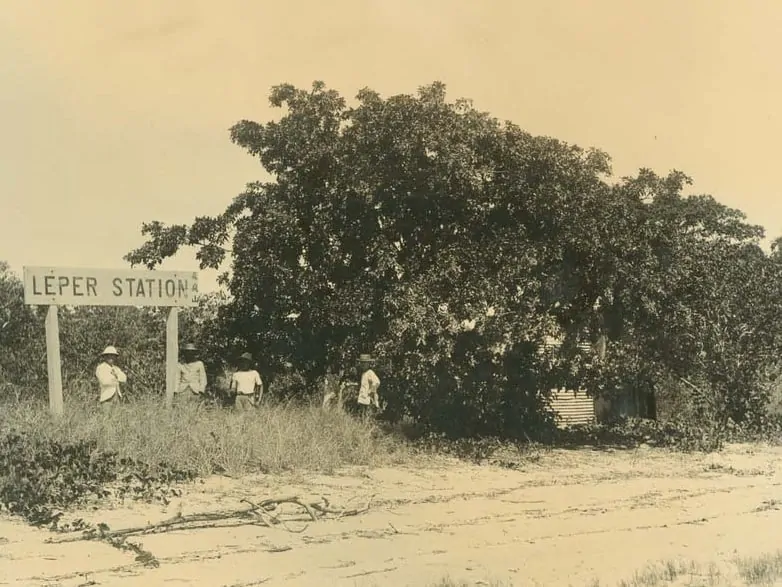
What is happening with the Leprosarium out at Channel Island? This is such an interesting piece of Darwin History that is shunned away. Would be good to see the site respectfully done up like Fannie Bay Goal.

Answer:
The leprosarium at Channel Island was heritage-listed in February 1997, which means that any proposed adaptation or re-use of the site would be subject to the Heritage Act.
The Channel Island Leprosarium opened as one of four quarantine stations in 1914. The leprosarium component opened in 1930, which allowed the closure of the Mud Island quarantine and leper station that served, along with Goat Island in Adelaide River and some ground on Channel Island, as a quarantine station for those suffering from leprosy and other diseases, including smallpox, from 1889.
“After the outbreak of small-pox in Hongkong at the close of last year, steamer after steamer from China was found to have cases aboard. At one time there were no less than 313 Chinese cases in quarantine here,” the NT Timesreported on 5 January 1889.
In June of that year, the paper reported a ‘shocking disclosure’: “…readers will learn with some degree of horror and astonishment that the unfortunate man Marcus Baker, who died in the Palmerston Hospital a few days ago, was the victim of leprosy.
“The authorities actually kept the man in the hospital for months, knowing that he was suffering from that loathsome disease, and utterly regardless to the safety of other patients or the community in general,” it railed.
Conditions at both Mud Island and Channel Island were extremely poor. Channel Island closed in 1955 when the significantly less draconian East Arm Leprosarium opened. It closed in 1982 after which patients were treated in regular hospitals.
The practice of ostracising leprosy patients from society came to the fore in 1937 when Madge Gaden, a white child, became ill and was sent to Channel Island. Prior to that, the leprosy population overwhelmingly comprised Aboriginal and Chinese patients although, as the Baker and Gaden cases demonstrate, it was not an exclusive disease.
At this point, any future use of the land where the leprosarium sat would be a matter for the NT Government.

0 Comments