

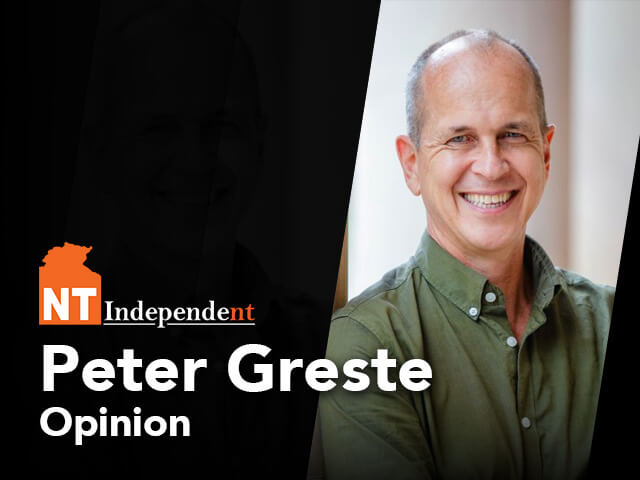
By Professor Peter Greste
OPINION: I’m used to writing angry opinion pieces and articles criticizing the way authoritarian regimes try to control journalists they don’t like.
I’ve complained about how the government in the Philippines abuses its own laws to harass and intimidate the upstart news website Rappler.com. I’ve spoken out about how countries like India, China and Turkey use the police to launch utterly spurious investigations against journalists, and about how the Egyptian government demands that reporters support its agenda by writing only flattering puff stories, while refusing to answer questions from those it doesn’t like.
So I can’t quite believe that I am now sitting down in front of my computer, to complain about an Australian government using similar tactics, and even more staggered that I’m doing it two years on from when this saga first began.
In early 2020, the Northern Territory Government suddenly stopped taking calls and answering emails from the NT Independent. It refused to allow the Indy’s journalists into news conferences accusing its owner of having a political agenda, and despite denying any policy to ban the paper, it still can’t get into news conferences or get answers to its questions.
A few weeks ago came the news that the NT Police sought authorisation from the Australian Classification Board to raid the Independent.
The only reason that raid didn’t happen was because the ACB – a federal government agency – rightly ruled that a news story about the police’s own attempt to suppress reporting about a serious sex crime could not be deemed ‘offensive’.
Most recently, the government issued an extraordinary threat of legal action against the ABC for publishing leaked documents about fishing rights in Aboriginal waters. The government quickly backtracked, withdrawing the threat of legal action and apologising to the ABC.
Even so, the incident exposes the government’s sensitivity to legitimate reporting, and its reflexive instincts to go nuclear rather than responding to important questions.
To be clear, the NT Government is not the same as Egypt or Turkey – no journalists are beaten and imprisoned in Darwin – but the tendencies of the powerful to acquire a sense of entitlement, to treat critical media as the enemy, and to see themselves as above public oversight are common in any government that has been around too long.
The system of press oversight is deeply flawed, often messy and not always edifying, but in a world where governments increasingly control the flow of information, journalists remain the best proxies we have for the voters who hire our politicians and the taxpayers who cover their salaries.
Without them, all we would be left with are the Facebook posts and Twitter feeds of our politicians and senior civil servants, and I don’t know anybody outside of government who thinks that’s a great idea.
Professor Peter Greste is an award-winning foreign correspondent who spent 25 years working for the BBC, Reuters and Al Jazeera in some of the world’s most volatile places. He is best known however, for becoming a headline himself, when he and two of his colleagues were arrested in Cairo while working for Al Jazeera, and charged with terrorism offences. A global campaign eventually led to their release after more than 400 days in prison. He has since become a vocal campaigner and advocate for media freedom and is the director of the Alliance for Journalists’ Freedom.

0 Comments