

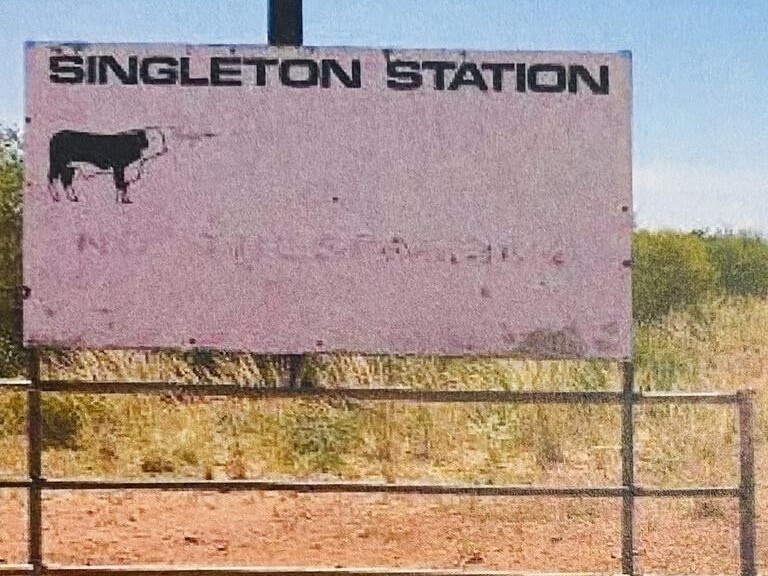
The NT Government’s Western Davenport draft water allocation plan, which covers an area including Singleton Station, has no provisions to prevent permanent damage to the environment, wildlife, and cultural sites, the Central Land Council chief executive Les Turner has said.
The draft allocation covers groundwater use in a 24,500 sq km area south of Tenant Creek, and is open for consultation until May 14.
The region includes Singleton Station, which has been allocated one of Australia’s largest water licences, eventually allowing the owners to use 40,000ML a year. The licence is now the subject of a Supreme Curt challenge.
Mr Turner, an Arrernte man, said the plan followed pretend consultations with traditional owners, which disrespected their concerns about site protection, their rights and interests in water and was opposed by the government’s own water advisory committee for the region.
“The so–called consultation process consisted of two misleading presentations by government water planners who spruiked out–of–date information. Traditional owners may as well have stayed away,” he said.
Alekarenge community leader Graham Beasley said the new plan would destroy his country and the traditional owners would get sick.
“That’s our country. We should be involved. What’s going to happen to our sacred trees?” he said.
““That’s our culture – we can’t give it away. They have already taken everything. What more do they want?”
Mr Turner said the government ignored sacred site protection while the pretending on the international stage to respect their cultural and ecological knowledge.
“Minister Lauren Moss’ address to the United Nations General Assembly last month was at odds with the government’s continued and complete contempt for Aboriginal cultural and environmental values when it comes to water planning,” Mr Turner said.

“The draft Western Davenport water allocation plan it has released for public comment offers no protection for our sites and the environment.
“Traditional owners might as well have stayed away since the plan only pays lip service to the concerns they raised.
“The new plan is a disgrace. It unmasks the NT government’s total disregard for Aboriginal rights and our sites.”
The ABC reported an un-named NT Environment, Parks and Water Security Department spokesperson saying there had been input from the Western Davenport and Ti Tree Water Advisory Committee, and it was “informed by both the Water Act and views of the committee, as well as research studies, water assessments, long-term monitoring and bore drilling”.
“As a measure of genuine intent to inform and seek the views of Aboriginal people, additional evidence-based consultations were held with traditional owners on the plan in Tennant Creek and in Ali Curung on two separate occasions,” the un-named spokesperson was quoted as saying.
“[The plan] is supported by the Western Davenport Implementation Actions which outline the ongoing commitments to further understand Aboriginal cultural perspectives on water through the establishment of Aboriginal reference groups.
“Establishing these groups [is] reliant on the cooperation of the CLC and how the cultural mapping work is planned to be completed.”
Mr Turner said the NT Government was also warned by the region’s water advisory committee that its estimate of how much water could be sustainably extracted was too high, and the plan does not adequately protect the desert environment and accused the government of mining water.
“Any drop in the water table risks irreversible damage to sacred springs, soakages and trees. Our country and culture will be sacrificed if water extraction is not carefully managed and limited,” he said.
“They’re not listening to Aboriginal people. They are not listening to scientists. Who are they listening to?”
He said the plan is supposed to balance the needs of industry and the environment to ensure the region’s groundwater is used sustainably.


Let us have a big sign on all Aboriginal sacred sites and sites of significance it will quickly get us to the forty billion dollar economy as you will no longer have to search for rich mineral deposits and fertile farming land.