

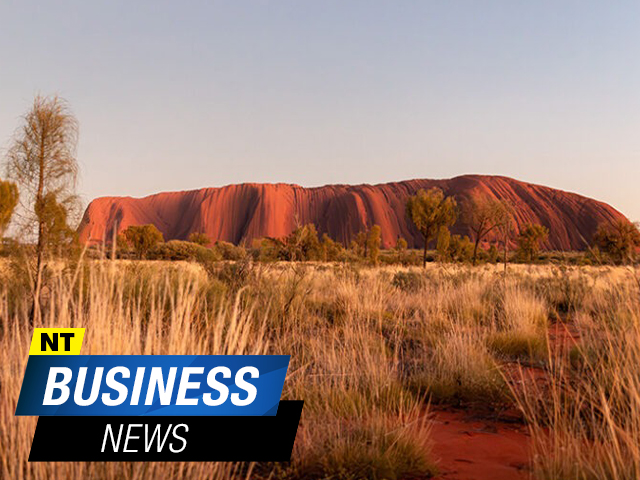
Business news from across the Northern Territory: The latest highlights include AAT Kings unveiling two new Short Break tours in the NT and Indonesia banning cattle imports due to a suspected botulism outbreak. Also making resource news is Santos getting federal environmental approval for its 100 km Barossa pipeline. NT’s mineral exploration expenditure hits $228.1 million for 2023, and NT’s resource exploration increases as mines close.
Industry
Indonesia bans cattle imports from cattle property after suspected botulism outbreak
Indonesia banned cattle exports from a still unnamed NT cattle station after being suspected as the source of a botulism outbreak that killed more than 100 cows on board the carrier Brahman Express. The Department of Agriculture, Fisheries and Forestry said it continues to investigate the cause of livestock mortalities and that clinical signs in cattle are consistent with botulism.
“Australia has received confirmation from the Indonesian authorities that the export of live cattle from a particular registered establishment in the Northern Territory has been temporarily suspended, pending further investigations to determine the cause of the incident,” the department said. The department would provide a report to Indonesian authorities after it investigates the cause of the Brahman Express cattle deaths.

Tourism
AAT Kings unveils two new Short Break tours in the NT
The NT has partnered with AAT Kings for two new Short Break tours that will last two to five days and are led by expert Driver Guides. These will allow tourists to personalise their holidays while learning about Aboriginal culture and viewing some of the world’s most spectacular vistas.
Tour highlights will include an Uluru Base Walk guided tour, a lesson in dot-painting with the Aboriginal Anangu artists of Maraku, and sunrise viewing at Kata Tjuta to the Nitmiluk (Katherine) Gorge.
AAT Kings is offering up to 15 per cent on choice tours to the NT and 5 per cent off its recently launched Short Break tours in the region for select departures from April 1 to December 31 this year. The offer ends on April 15.
“We partnered with Australia’s Northern Territory since it is one of the most captivating places in the world, showcasing the Outback’s incredible vast landscapes with its ancient Aboriginal culture and sacred sites. We appreciate our loyal travel advisors community for helping to promote the territory as one of the must-see destinations to visit in 2024,” AAT Kings CEO Ben Hall said.
Resources
Santos wins federal environmental approval for Barossa pipeline
The federal government has given Santos the go signal to lay down a 100 km stretch of the pipeline connecting the Barossa offshore gas field to Darwin. The approval is a significant milestone for Santos’ Darwin Pipeline Duplication (DPD) project.
Santos won approval from the NT government in January and secured a high-profile court challenge by a group of Tiwi Traditional Owners. The 100 km stretch of pipeline that runs parallel to the present Bayu-Undan pipeline has been approved by Environment Minister Tanya Plibersek, subject to conditions under the Environment Protection and Biodiversity Conservation Act. The DPD will connect the Barossa Gas Export Pipeline to the Darwin LNG facility at Wickham Point.
The EPA’s assessment report sees the Barossa project to produce 276 million tonnes of CO2-equivalent emissions over its lifespan. The Environmental Defenders Office, on behalf of Tiwi Islanders, launched an unsuccessful challenge against the Gas Export Pipeline. They claimed it would destroy Sea Country, Dreaming tracks, Songlines and areas of cultural significance, including burial sites and animal habitats.
The federal court dismissed the case, saying that the EDO had lied to the Tiwi Islanders.

Mineral exploration expenditure hits $228.1 million
The NT’s mineral exploration expenditure for 2023 went up to $228.1 million, up 14 per cent over 2022’s $199.9 million. The 2023 figure represents the most significant expenditure seen over a decade and is just shy of the 2011 figure of $228.4 million—the highest-ever recorded expenditure in the NT. The 14 per cent increase in 2023 is way above the national average increase of five per cent.
The NT government said the demand for critical minerals worldwide continues to drive this growth in exploration, with a large proportion of the expenditure increase attributed to lithium, rare earth elements and other vital minerals.
The increase was boosted by the federal government’s commitment of $840 million to aid the delivery of the first combined rare earths mine and refinery in the NT. The refinery contributed $4.86 billion to the NT economy from 2022 to 2023.
(NT gov’t media release)
NT’s resource exploration increases as mines close down
Exploration companies spent more than $228 million in NT last year. However, exploration activities take time to generate new mines. Despite over a century of mining, the NT presently has eight mines, with two currently put on the back burner, vis-à-vis Western Australia, with around 125 mines in operation.
Elmore’s Peko magnetite mine—under voluntary administration—and Core Lithium’s mine have both suspended mining in January this year. Only six mines are still operational, including Newmont’s Tanami gold mine, McArthur River zinc, lead and silver mine, Groote Eylandt manganese mine, Rio Tinto’s Gove bauxite mine, the Sill 80 ilmenite mine about 100km east of Mataranka, and the Dhupuma Plateau bauxite mine near Gove.
Minerals Council NT said that NT’s royalty setting should be equal, if not greater than Western Australia, to be competitive. In the NT’s new ad valorem royalties regime, the royalty rate applied to gold will be between 5 and 7.5 per cent, dependent on processing, compared with a flat royalty rate of 2.5 per cent for gold in Western Australia.
The council is also concerned that the new regime does not correctly represent the actual transportation costs in the NT, the impact of grandfathering existing mines and the ongoing effects of red tape on the sector.


0 Comments