

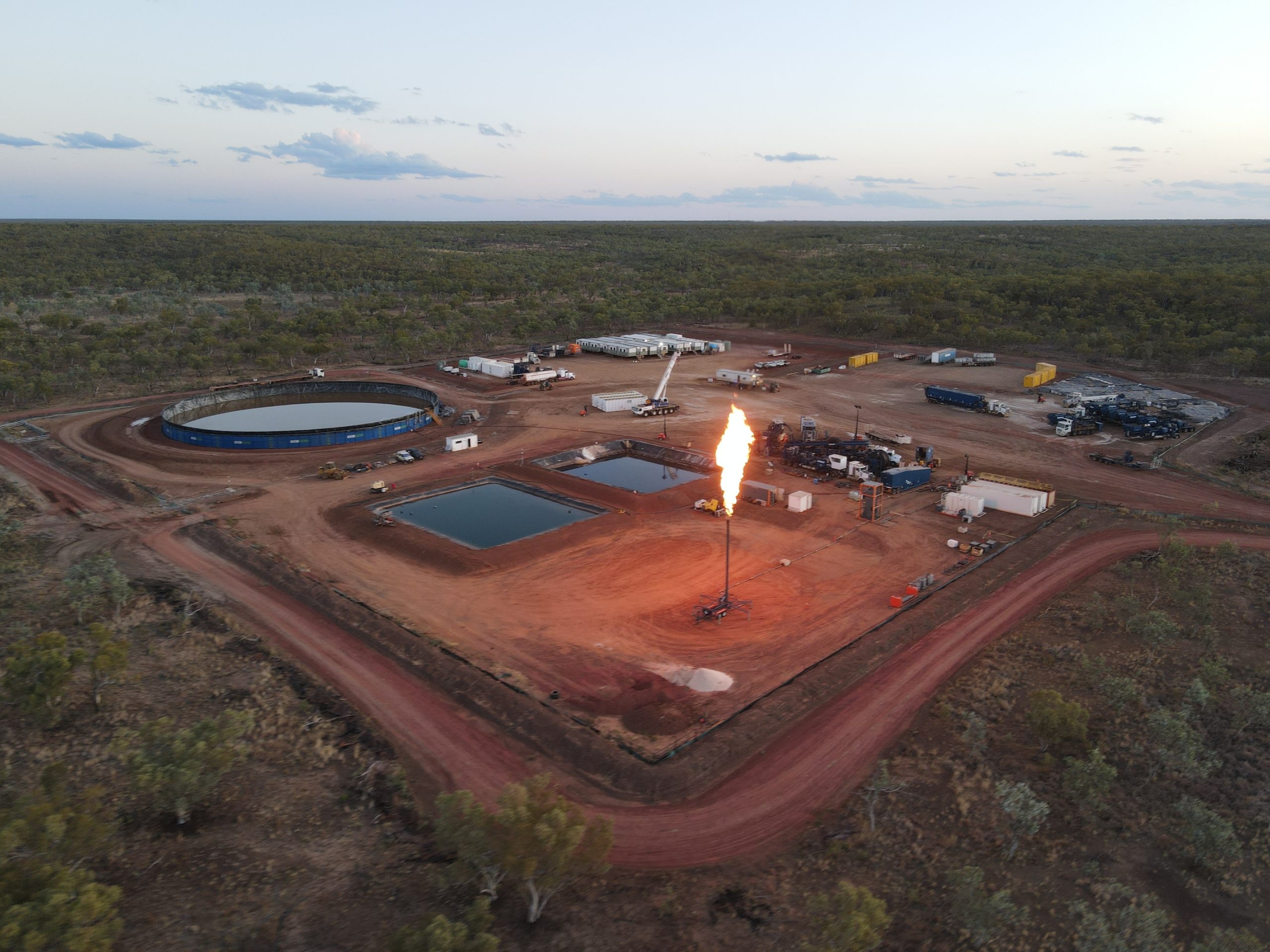
The Lock the Gate Alliance is challenging the NT government’s approval of Empire Energy’s Larrimah fracking exploration project in the NT Civil and Administrative Tribunal, the environmental organisation has said.
Alliance spokesperson Pete Callender said a directions hearing in the NTCAT was set to begin on Friday morning and his organisation believed the impacts and risks of the project to water were likely to be far greater than predicted by the NT government.
“We believe Empire Energy’s Larrimah fracking project poses an unacceptable risk to precious water in the Northern Territory, Mr Callender said.
“Fracking requires vast quantities of toxic chemicals and produces huge volumes of wastewater.
“The recent incident of contamination of vegetation at an Empire Energy Carpentaria fracking well highlights the risks that such projects pose to the environment.”

The alliance contends that the Larrimah fracking project, which will be relatively close to tourist spot Bitter Springs near Mataranka, represents a significant threat to the local groundwater and surface water resources.
Mr Callender said that NTCAT should refuse the environment management plan when the project’s merits are fully assessed.
Previously Empire Energy chief executive Alex Underwood had told the media the project would bring jobs, new services and infrastructure, and royalties to the area and said it would be a “short-term, low-impact activity”.
He said said in the company’s decade-long involvement in the Beetaloo basin it had “exceeded regulatory requirements” when working with traditional owners and causing minimal environmental impact.
According to an incident report released publicly last Tuesday, filed three days earlier, Imperial Oil and Gas, a subsidiary of Empire, reported rainwater was pumped off an enclosed above-ground wastewater storage tank at its Carpenteria Five well near Borroloola and mixed with wastewater, leading to an estimated 2,000 litres of contaminated water being pumped onto nearby vegetation.

The company said sampling and pump-off of the rainwater commenced on December 24 and continued until January 8, “when the vegetation, where fluid was being released, was visually identified as being stressed”.
The company said it then stopped the pump-off, transferred the flowback fluid to an alternative tank and launched an investigation into the cause of the increased salinity.
Empire Energy’s approved EMP states that Empire’s proposed fracking project will involve drilling six fracking wells and use up to 410 million litres of groundwater and 60,000 tons of hydraulic fracturing proppant, a mixture of sand and chemicals.
The Alliance said the project would produce 189 million litres of toxic flowback fluid, which would be sent to tanks via 76 km of underground wastewater flowline pipes, 3,645 m3 of drilling waste, and 227,421 tonnes of carbon emissions.
The project will also necessitate the removal of up to 222 hectares of vegetation.


Is this why claims of the project being to expensive to produce gas at a reasonable price appear in anti gas posts on Facebook. The whole project began with an anti fracking moratorium.
I can only hope that the Alliance’s challenge is successful.
As your narrative spells out, the risk to our potable water resources and the potential impact on vegetation cannot be sanctioned at any level.
If our water is contaminated, we will all need to leave the Territory. We won’t be able to recoup any money invested in our homes or businesses because no one will want to buy them. The native flora and fauna will also be decimated and farming livestock will be reduced to nothing.
The risks are too high. There are other ways to generate ‘own income’ that won’t pose similar threats.