

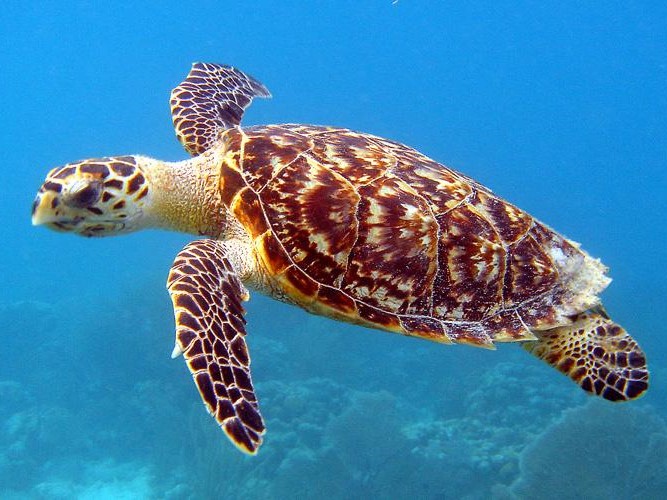
The impact of rising sea levels and increasing sand temperatures on northern Australia’s turtle populations will be studied by Charles Darwin University, the Australian Institute of Marine Science, and indigenous ranger groups, the university has said.
CDU Northern Institute senior research fellow and project lead Dr Rachel Groom said climate change posed a significant threat to turtles in northern Australia, with rising sea levels resulting in more and more turtle nests being drowned and an increase in sand temperature affecting hatching success and the gender of hatchlings.
“Turtles are threatened species that are vulnerable to many impacts,” Dr Groom said.
“Climate change is a process driving significant changes in nesting populations though we don’t have the data to quantify these impacts so this research will help answer questions that underpin the conservation of these animals.”
“We will look at a range of things including sea level rise models, oceanographic data, predation pressure, and information around sea surface temperature to help us determine which nesting areas are most vulnerable to impact.”

Dr Groom said the study would include risk-based modelling of sea-level rise and temperature on NT nesting beaches, record the hatching success of three nesting stocks, and conduct fieldwork to characterise nesting habitats and recording of beach and in-nest temperatures.
AIMS fellow researcher Dr Vinay Udyawer said climate factors affect marine turtle nesting populations differently, and in some cases, non-climate factors such as nest predation could have a more pronounced impact.
“We’ll be conducting the project across key nesting locations in the NT intending to identify the specific processes most likely to influence each species and genetic stock,” ” Dr Udyawer said.
“This assessment will enable us to develop precise mitigation strategies tailored to the unique challenges faced by these populations,
“We will work with the rangers and provide training in collecting nest environment data and support them to implement appropriate mitigation measures beyond the life of this project.”
Researchers also aim to learn more about hatchling sex ratios in nests through the collection of nest temperature data.
Dr Groom said temperature plays a key role in determining a turtle’s sex with researchers currently seeing an increasing trend of female hatchlings as hot temperatures produce females and cooler temperatures produce males.

“At the moment we aren’t entirely sure what this higher ratio of female hatchlings will mean. There will be reduced genetic diversity which can lead to reduced fitness; likely, it’s another factor impacting these recovering populations, but we need more information on this.”
Dr Groom said if the data shows some significant impacts from temperature, mitigation measures such as shading and cooling the nests will be discussed and co-designed to improve hatching success for Green, Hawksbill and Olive Ridley turtles.
“Local ranger knowledge is critical to this project as they are strong knowledge holders and many rangers, or their families have significant cultural responsibility and authority to look after turtles,” Dr Groom said.
CDU and AIMS researchers will be working with ranger groups including those from Anindilyakwa, the Tiwi Islands, and e Rangers, Crocodile Island rangers, Bawinanga rangers and Li-Anthawirriyarra rangers.
The study has been granted a $500,000 by the federal government.

0 Comments