

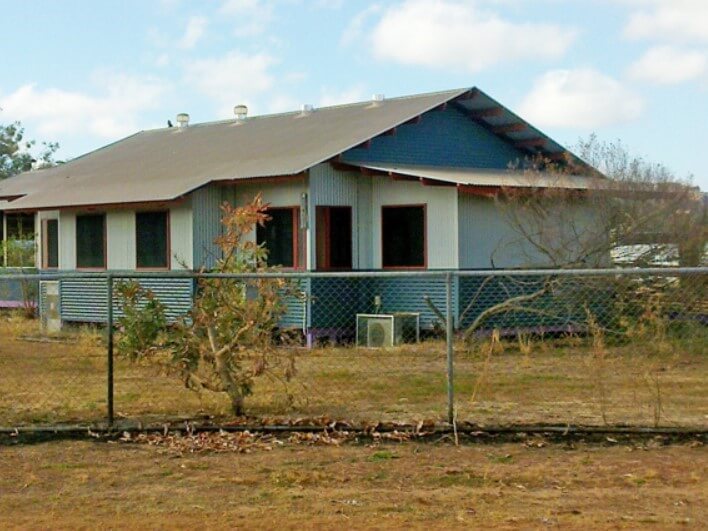
Two Gunbalanya residents have filed a class action suit in the Federal Court citing excessive rental payments for unsafe, unsecured and uninhabitable housing, law firm Phi Finney McDonald has said in a statement.
Phi Finney McDonald’s senior associate Madeline White said her firm filed the action on behalf of tenants who she said were paying ridiculous rent for housing that falls below the basic minimum standards, alleging the Housing Department chief executive officer failed to maintain public housing in remote Aboriginal communities.
She said that under the Northern Territory Intervention, the commonwealth and Territory governments forcibly ended Aboriginal community control of housing in 73 remote Aboriginal communities across the Territory and took responsibility for managing that housing.
And that the class action allows the 73 remote communities of the Northern Territory to together pursue compensation for the inadequate housing they have been left with.
“This case could have far-reaching impacts. Applicants are seeking repayment of rent, damages, and orders for repairs,” she said.
“If the case is successful, it has the potential to not only improve housing conditions in the Northern Territory, but in all remote Aboriginal communities in Australia.”

Ms White said the case is led by plaintiffs Otto Dann and Eleanor Manakgu from Gunbalanya in West Arnhem Land.
The statement quoted Ron Mangiru, 53, described as a Gunbalanya community leader who cares for his brother who is unwell, and who requested the government provide air conditioning.
“It’s really not good enough and is very complicated for us Aboriginal people living in remote communities. White people are given houses with air con or people come and fix the air con,” he said.
“But we live in a hot area and have no air conditioning. I am scared about the health impacts the heat has on my brother.”
Ms White said the class action was filed in the Darwin registry of the Federal Court, and alleges it was immoral for the housing CEO not to repair houses, not to lessen rent where houses were not in good condition, and fail to explain tenancy agreements to renters who had no other option for housing.
“This conduct, applicants said, amounted to unlawful racial discrimination,” she said.

Redgum Legal and Consulting legal representative Daniel Kelly said that the legal action was essential to hold the government accountable and ensure housing conditions are upgraded.
“The housing crisis has continued in remote communities for years, as have the physical and mental health impacts, and the negative effects on education and employment outcomes,” he said.
“The Territory government and the commonwealth government have not communicated plans to bring all housing up to the legal standard, and tenants have no option other than to seek redress through courts.”
He said remote Aboriginal communities houses managed by the Housing CEO still fall short of minimum standards for safety, habitability and security.
Mr Kelly said that through the Australian Lawyers for Remote Aboriginal Rights, he had worked with the community of Santa Teresa since 2015, with their housing case running since 2016, and was now before the High Court, with a hearing likely to take place in 2023.
He said the community of Laramba was also taking action against the government for failing to provide safe and habitable housing. Their housing case commenced in 2019 and argues that houses that contain drinking water with elevated levels of uranium are not safe and habitable, he said.
The NT Independent contacted the Territory Families, Housing and Communities Department for comment.


0 Comments