

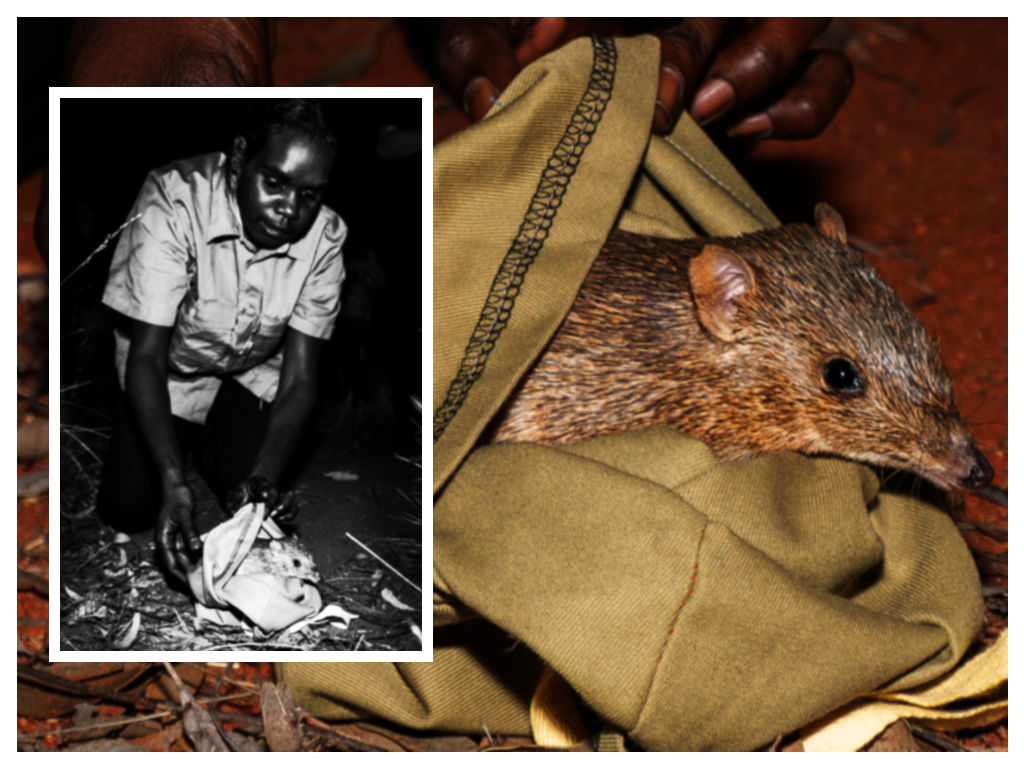
Golden bandicoots have been released at the Australian Wildlife Conservancy’s Newhaven Wildlife Sanctuary, on Ngalia-Warlpiri and Luritja country, as part of a restoration project for the creatures in central Australia, the organisation has said.
AWC chief science officer Dr John Kanowski said the Ngarinyin people, traditional custodians of Wilinggin country in Western Australia’s Kimberley, gifted a founding population of 40 of the vulnerable bandicoots from AWC’s Charnley River-Artesian Range wildlife sanctuary to Newhaven’s mammal restoration project.
He said the golden bandicoot used to be one of the most common small mammals in the arid zone, where it was an important food item for First Nations peoples, and the species was once found across mainland Australia but was now listed as ‘threatened’ with a highly fragmented distribution, and a 95 per cent reduction in its range.
Dr Kanowski said they were now primarily found on offshore islands of WA and the NT, with the north-west Kimberley host to the only remaining natural mainland population.
Up to 60 additional golden bandicoots will be sourced from Barrow Island in WA and released at Newhaven, about 3050km northwest of Alice Springs, later this month.

Golden bandicoots, the smallest of its genus, have long, pointed heads and compact bodies, with adults being only half the size of the northern brown bandicoot and the southern brown bandicoot. They can weigh up to 670g as adults and grow to an average length of 24.5cm with an average tail length of 10.5cm.
“The reintroduction will help secure the long term future of the species. The golden bandicoot is one of many small mammals that have been extirpated from the region due to predation by cats and foxes and altered fire regimes,” said Dr Kanowski.
“As ecosystem engineers, golden bandicoots play an important ecological role – turning over soil, which increases the rate of leaf litter decomposition, soil production and nutrient cycling.” “This has been a long-awaited reintroduction that required years of planning and research to successfully achieve.
“Our ecologists and partners have spent many hours in the field developing an identification process for the golden bandicoot while also determining their range and abundance.” Dr Kanowski said ecologists attached VHF radio collars or tail-mounted tags to 20 individuals to monitor their movements and health for up to four weeks, then the bandicoots were released inside Newhaven’s 9,450ha feral predator-free fenced area, where they became the seventh species reintroduced to the safe haven.


0 Comments