

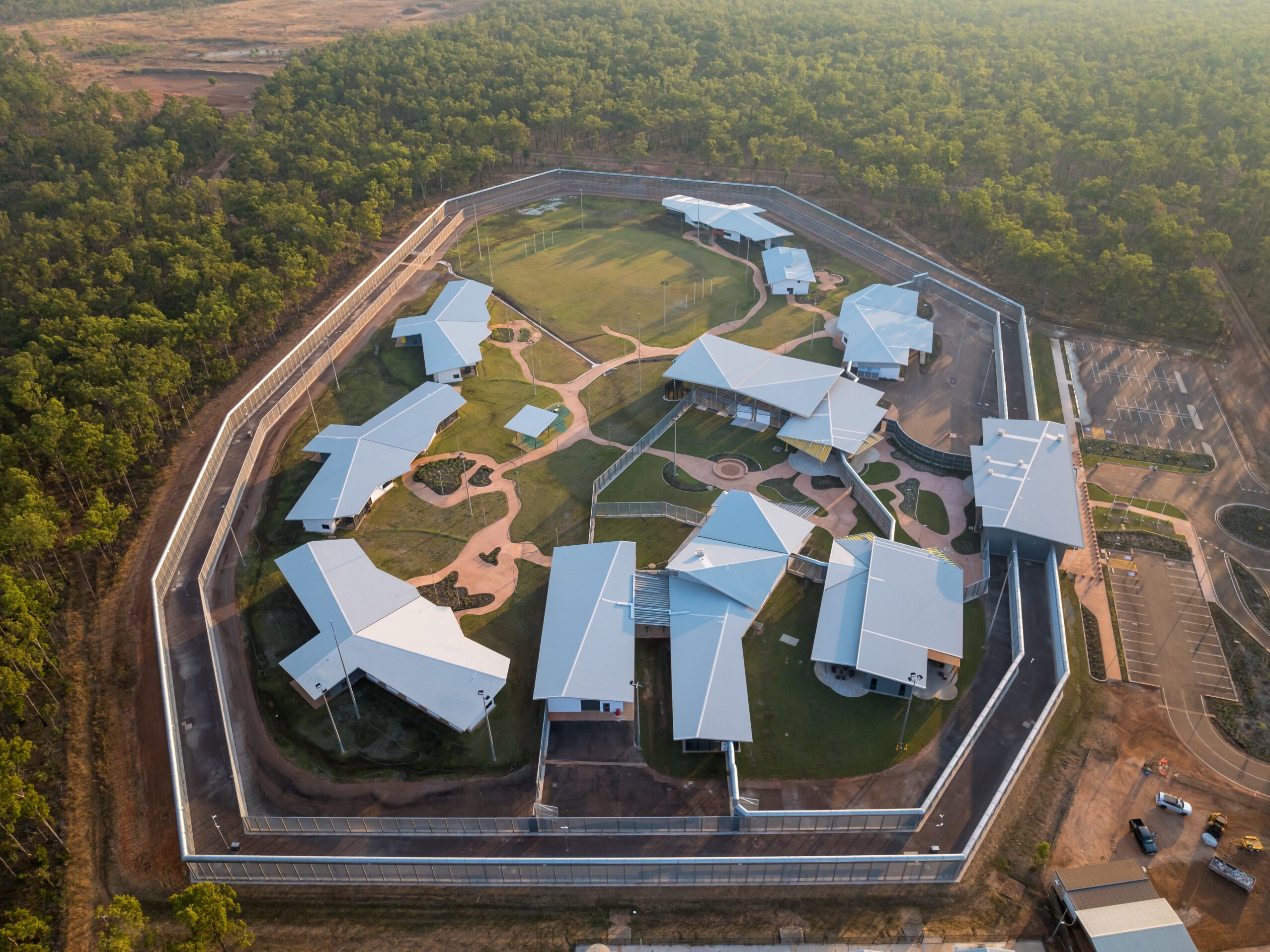
The Finocchiaro CLP Government is facing heavy criticism for blocking a United Nations Special Rapporteur from inspecting Darwin’s Holtze Youth Detention Centre, leading to allegations of covering up institutional abuse and other systemic failures.
It is the second time in a year that the CLP has denied access to UN human rights investigators at NT prisons, drawing widespread condemnation from legal experts and human rights groups.
UN Special Rapporteur on the Rights of Indigenous Peoples Dr Albert Barume had planned a visit to Australia to assess youth detention conditions but said last week that both the NT and Queensland governments refused to meet with him or allow him entry to Darwin’s Holtze Youth Detention Centre and Queensland’s Cleveland Youth Detention Centre.

Criminology expert Dr Joel MacGregor at Swinburne University said the NT Government’s decision to block the UN from inspecting the youth facilities was “an alarming move” and an affront to crucial independent oversight.
“If governments want the community to have confidence in the youth justice system, transparency and independent accountability must be part of the commitment,” he said.
“Youth detention facilities are responsible for some of the most vulnerable children in our community. Depriving children of their liberty does not remove the government’s responsibility to protect their safety, wellbeing and fundamental human rights.”
Prominent Darwin barrister John Lawrence, who has represented clients in youth detention, said allowing independent scrutiny could expose the NT Government to significant embarrassment and potential civil litigation.
“I think if a rapporteur was able to examine the conditions and report to the community, it could lead to all kinds of embarrassment and inconveniences for the government, including civil suits. It would be a scandal,” he told ABC News.
Mr Lawrence added he had no doubt the NT Government had “a lot to hide”.
The ABC reported in January that in the 12 months after the Holtze Youth Detention Centre opened in November 2024, numerous incidents occurred, including nine young people hospitalised for self-harm and two cases of sexual assault.
There were also 127 assaults between detainees, several escapes, and a hunger strike. The 2024-25 NT Children’s Commissioner’s annual report also described extended lockdowns and inappropriate use of force.
NT Corrections Commissioner Matthew Varley appeared on ABC Radio Thursday afternoon to provide what he said was the “full picture” of the current state of the corrections system, stating that if there were any concerns that he would “welcome people to come and talk to me about it”, but apparently not the special rapporteur.
Mr Varley used most of the interview to discuss how “large” the NT corrections system has become and heaped praise on the government for its “significant investment”.
“I have the largest budget I’ve ever had, so, you know, this year I am the fourth largest public service department in the Northern Territory Government. I have close to 1,700 personnel on my books and a budget north of $550 million – that is a significant investment that the government has put into my facilities, and that is paying dividends,” he said.
“And I don’t say that, you know, to blow wind up anyone. What I’m saying is…we have grown and scaled this department and this system to do the job that Territorians expect of us, and we are delivering results.”
Mr Varley added that the UN special rapporteur was blocked from observing “his” youth detention centre because “the government has taken a decision that it is satisfied with the systems and the reporting and the oversight that we have in place locally”.

National Commissioner for Aboriginal and Torres Strait Islander Children and Young People Sue-Anne Hunter welcomed Dr Barume’s visit, adding she will raise concerns about the child protection and youth justice systems.
“The refusal to allow access raises serious questions about transparency and accountability,” she said.
“f governments are confident children are safe, and their rights are being upheld, independent scrutiny should not be feared.”
Ms Hunter added the refusal to allow independent scrutiny demonstrates the government does not treat the rights of Aboriginal and Torres Strait Islander children and young people as a priority.
Australia has agreed to independent oversight through the Convention on the Rights of the Child, the UN Declaration on the Rights of Indigenous Peoples, and the Optional Protocol against Torture, and these commitments must apply even when scrutiny is uncomfortable, she said.
“To the Queensland and Northern Territory Governments directly: prove me wrong. Open your youth detention centres to the Special Rapporteur before his visit ends on 13 November, and show that you are keeping children safe from harm.”
In December 2025, UN inspectors, who were denied access to Territory jails, strongly criticised Australia’s treatment of prisoners following their visit.

0 Comments